
DRINKS For
DRINKS For
DRINKS For
DRINKS For
DRINKS For


The 95/5 rule states that in most categories only about 5% of customers are in the market to buy at any given time, while 95% are not. For eCommerce brands, this means the majority of your audience will not purchase today no matter how much you spend. The winning response is not to fight harder over the 5%, but to give the other 95% more reasons to visit through complementary, high-affinity products. This guide explains the rule, why it breaks most acquisition strategies, and how brands widen the buying window instead of bidding for it.
The 95/5 rule is a marketing principle stating that roughly 95% of potential buyers in a category are not ready to purchase at any given moment, while only about 5% are actively in market. In some categories the out-of-market share reaches 98%. The rule comes from research into how businesses and consumers actually buy, and it applies to most eCommerce categories.
The reason is simple frequency. People buy running shoes twice a year, flowers once a quarter, and a mattress once a decade. Most of the time they are not in the market for what you sell, and retargeting a customer who has no need just annoys them.
The 95/5 rule breaks most strategies because brands respond by fighting over the same 5% of ready buyers, which drives up acquisition costs without growing the market. They bid up the same keywords, discount to force the timeline, and retarget the same shopper until they convert or disengage.
That approach is a grind, and it gets more expensive every quarter. AI and rising competition aside, you are crowding into a tiny window with every rival you have, and the winner is usually whoever pays the most to be there. The deeper issue is not traffic. If someone visits once a quarter, you are invisible the other 89 days regardless of spend. That is a relevance problem, and you cannot buy your way out of it.
You reach the out-of-market 95% by giving them a different reason to visit, since the customers who won't buy your core product today are still buying something else. They are in market for a gift, a dinner, a celebration, or a small treat, just not for the single thing you happen to sell.
The fix is to sell a few of those adjacent things too. Not a random pile of products, but a handful chosen because your customer already wants them in the same moment they want you. Each complementary category is another reason to visit, another reason to fill the basket, and another reason to come back. More moments mean more revenue, at a fraction of what acquisition costs.
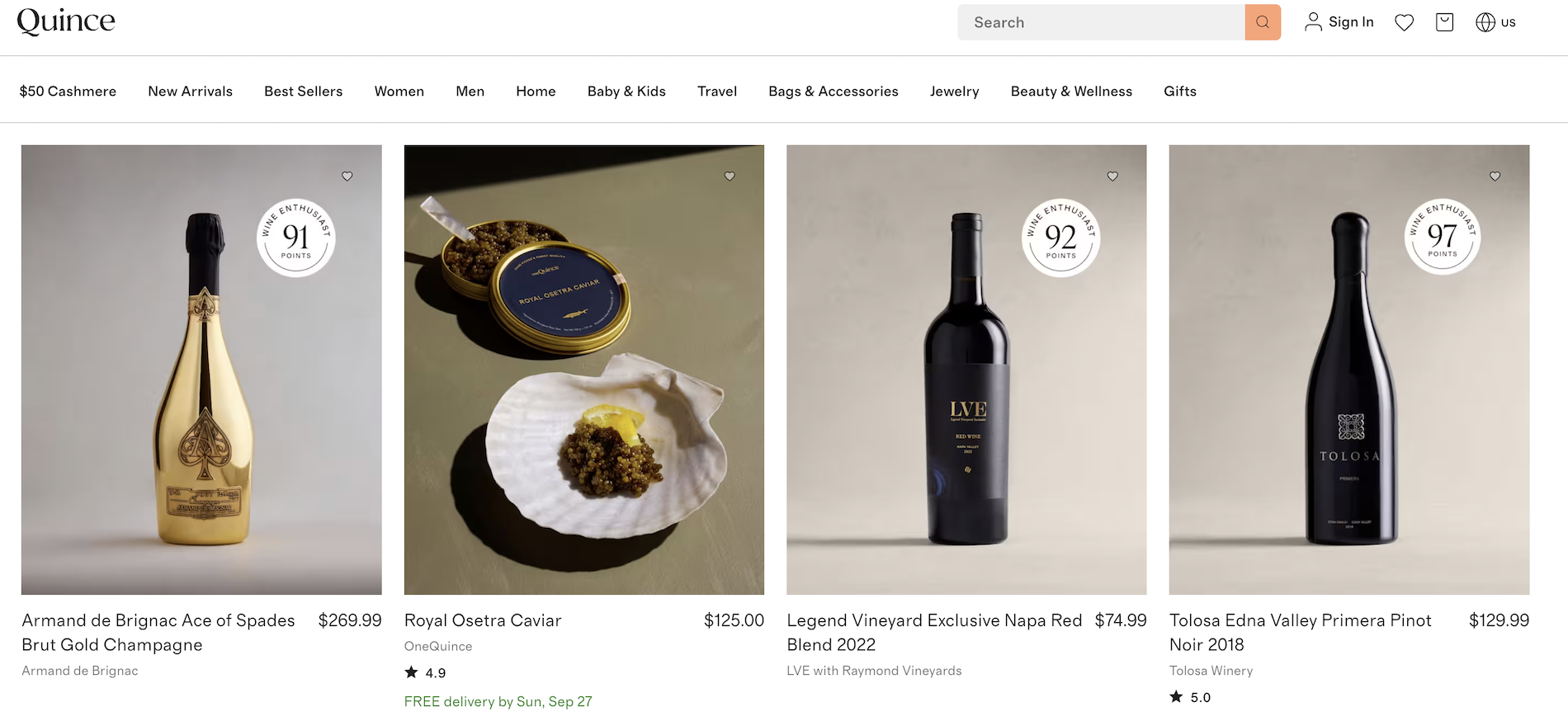
Brands like UrbanStems and Quince apply the 95/5 rule by adding high-affinity categories that create new purchase occasions around a low-frequency core product. Both added wine, and both did it inside the checkout they already owned.
UrbanStems sells flowers, a classic low-frequency purchase. It added curated wine that pairs with a bouquet so a gift feels complete. Wine attached at a rate 62% higher than chocolates or cookies, turning a single-item gift into a full occasion.
Quince sells premium essentials, another category people do not shop weekly. It added wine beside the caviar and serving pieces, launching with Dom Pérignon to hold the quality line. Now a customer planning a dinner finds the wine at the point of inspiration, not on a separate trip.
Neither brand outspent anyone. They out-curated the competition. DRINKS handled the compliance, tax, age checks, and fulfillment behind the scenes, which is the only reason adding a regulated category looked effortless to the customer.
The cost of ignoring the 95/5 rule is lost revenue every time a customer leaves with a single item and lost relationships every month they do not return. When a customer walks out with one product, you have handed the rest of the occasion to someone else. When they stay away, a competitor or marketplace fills the gap you left open.
The demand is already there. Two-thirds of U.S. consumers say they would buy alcohol from a retailer they already trust if it were simply offered to them. That is not demand you have to manufacture. It is demand waiting for you to stop sending it elsewhere. You do not need more traffic; you need more reasons for the traffic you have to buy.
It means most of your customers are not ready to buy your core product on any given day. Rather than spending more to reach the 5% who are, you can add complementary categories that give the other 95% a reason to visit and buy something else.
No. The 80/20 rule (the Pareto principle) describes how a small share of customers drives most revenue. The 95/5 rule describes how a small share of a market is ready to buy at any given time. They address different problems.
Complementary, high-affinity products create additional purchase occasions. A customer who is not in market for your core product may still be in market for a related item, so adding it captures demand you would otherwise lose.
No. The point of the 95/5 rule is that you already have enough traffic; you need more reasons for existing visitors to buy. Category expansion increases revenue per visitor rather than requiring new visitors.
Latest articles
.jpeg)
Blog
DRINKS Anywhere
eCommerce
Wine
Blog
DRINKS Anywhere
eCommerce
Wine
Blog
DRINKS Anywhere
eCommerce
Wine