
DRINKS For
DRINKS For
DRINKS For
DRINKS For
DRINKS For

Every fashion and retail eCommerce leader is watching the same line move in the wrong direction. Customer acquisition cost was manageable three years ago, and now it isn't. The auctions are more crowded, the platforms take more margin, and each new customer costs more to win than the last. The reflexive response is to find cheaper traffic, but there's a more useful way to look at the problem, and it changes which lever you reach for.
Rising CAC is only half of a ratio. The other half is how much revenue you earn from each visitor once they arrive. When you frame it that way, you notice something: almost all of the effort and budget goes into the first number, getting more people in the door, and almost none goes into the second, earning more from the people already there. That's backwards, because revenue per visitor is the one lever that doesn't get more expensive every quarter.
Why traffic is the expensive lever and revenue-per-visitor is the cheap one
Buying more traffic scales linearly with spend, at best. You put in more money, you get more visitors, and the cost per visitor keeps creeping up as competition intensifies. There's no efficiency to be won there, only volume to be rented at a rising price.
Revenue per visitor works differently. If you can get more value out of each existing visit, that improvement applies to all the traffic you already have, without paying to acquire a single additional person. It compounds against your current volume instead of requiring new volume. For a CRO trying to fix acquisition economics, that's the difference between a lever that scales with ad spend and one that doesn't.
The 95/5 rule is why you have so much unmonetized traffic
Here's why the opportunity is bigger than it looks. In most categories, only about 5% of customers are ready to buy on any given day, while 95% are not. That means the overwhelming majority of the visitors you're paying to acquire arrive with no immediate intent to buy your core product. You already paid for them. They're already on your site. And most of them leave without buying anything, because the one thing you sell isn't what they need this week.
That's an enormous pool of paid-for, unmonetized traffic. The question isn't how to get more of it. It's how to earn something from the visitors you're already getting who aren't in the market for your hero product today.
Category expansion raises revenue per visitor directly
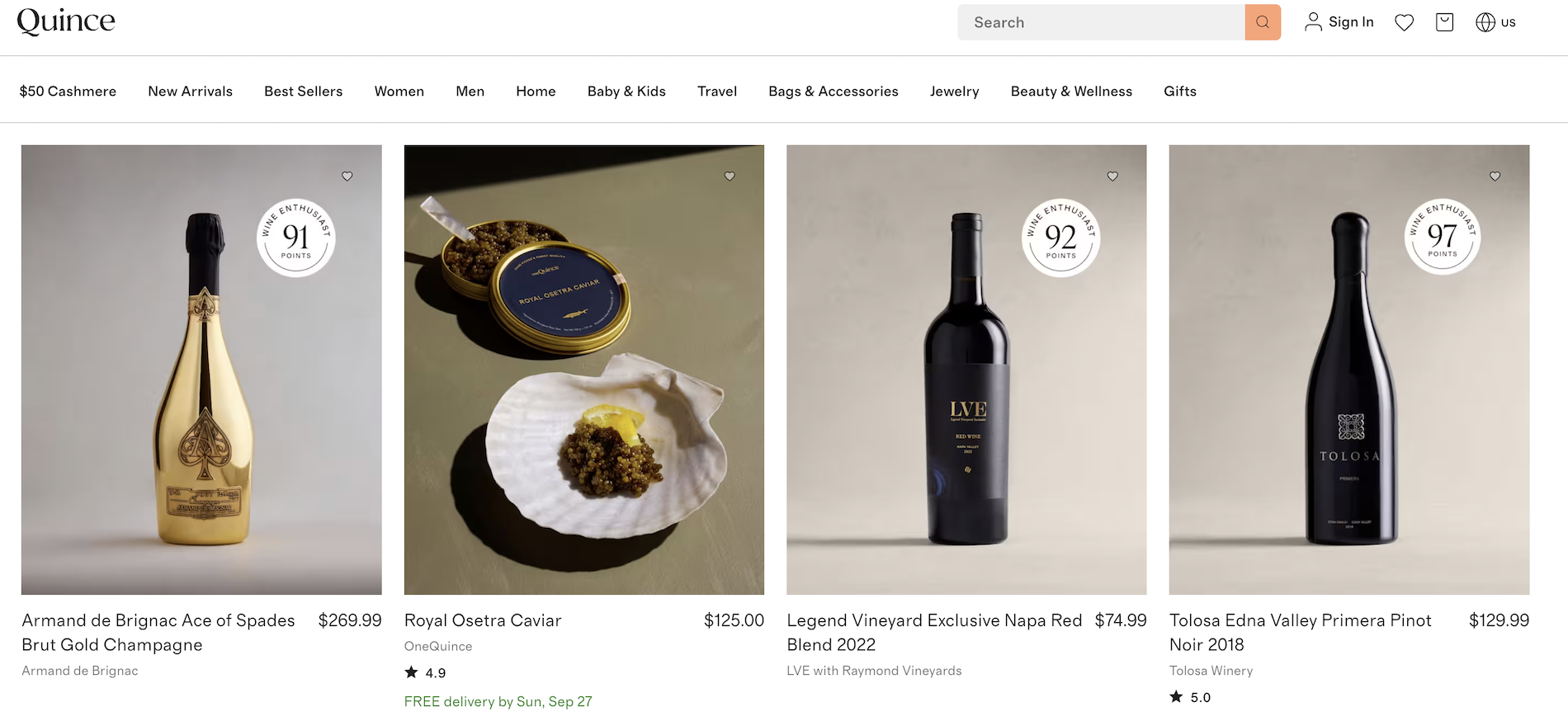
Adding a high-affinity category is the most direct way to lift revenue per visitor, because it gives a visitor who wasn't going to buy your core product a reason to buy something else. The customer who isn't shopping for a new coat today might still be planning a dinner this weekend. Offer the wine that belongs at that dinner, and you've converted a visit that would have earned you nothing into a sale, from traffic you already paid for.
The economics are clean. DRINKS partners typically see 1.5 to 5% incremental GMV from adding beverage alcohol, and because it runs on the site and checkout you already own, the operational lift is close to zero. That incremental GMV isn't coming from new traffic. It's coming from the same visitors, now buying something you couldn't previously sell them. You've raised the revenue per visitor without touching the acquisition side of the ratio at all.
Why alcohol specifically
Of all the categories you could add to lift revenue per visitor, alcohol has an unusually strong claim for a retail brand, for two reasons. First, the affinity is real — it attaches to the exact occasions your products already show up for, so it's a natural co-purchase rather than a random adjacency. Second, the demand is already proven and already leaking. Two-thirds of consumers say they'd buy alcohol from a retailer they trust if it were offered, and DRINKS estimates a $40 billion gap between where consumers discover alcohol and where they can actually buy it. That gap is revenue-per-visitor you're currently leaving on the table, one visit at a time.
The CAC problem feels like it demands cheaper traffic, but the traffic isn't really the issue. You're under-earning on the visitors you already have, most of whom aren't in-market for your core product on any given day. Raise the revenue you earn per visit, and you improve the acquisition math from the side that doesn't scale with ad spend. Category expansion is how you do it, and alcohol is the highest-yield category to start with.
See what it adds: drinks.com/anywhere
Latest articles

Blog
DRINKS Anywhere
eCommerce
Wine
.jpeg)
Blog
DRINKS Anywhere
eCommerce
Wine
Blog
DRINKS Anywhere
eCommerce
Wine