
DRINKS For
DRINKS For
DRINKS For
DRINKS For
DRINKS For

Retailers can sell wine online without taking on alcohol licensing themselves. They do it through embedded alcohol commerce. Embedded alcohol commerce is a model where a retailer sells wine on its own site while a licensed partner handles compliance, tax, age verification and fulfillment.
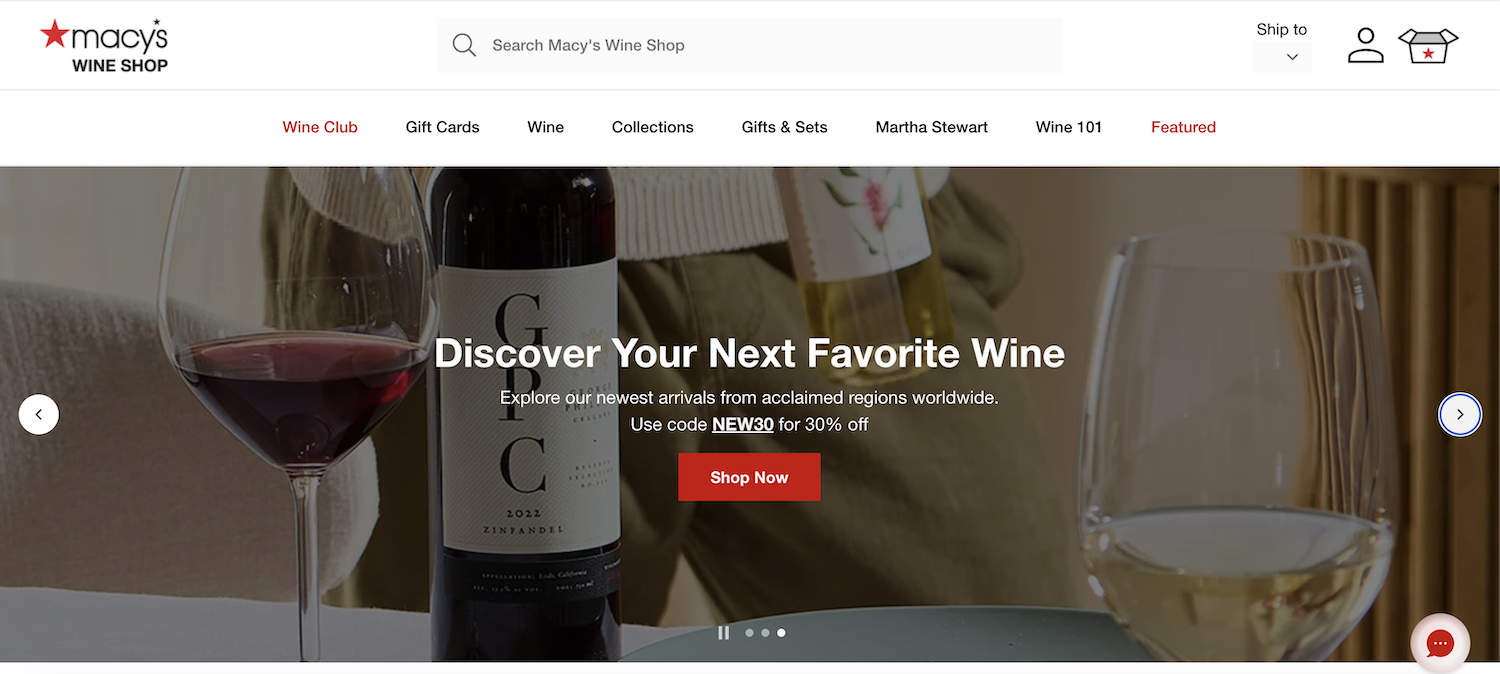
Macy's has run its Wine Shop this way with DRINKS since 2021. Most case studies stop a few months after launch. Macy's Wine Shop offers five years of data on how the category performs over time.
So far in 2026, 85.6% of Macy's Wine Shop customers are returning buyers. The shop converts at 4.46%, and the average order is $108.21.
Embedded alcohol commerce is a model that lets a retailer or consumer brand sell wine and spirits on its own site without holding alcohol licenses. A licensed partner handles state compliance, tax, age verification and fulfillment. The retailer keeps its brand and its customer relationship.
Alcohol has long been one of the hardest categories to sell online. In the US, wine sales move through licensed producers, distributors and retailers. Each state sets its own rules for tax, shipping and age checks. Most retailers stayed out of the category as a result.
Shoppers would buy if retailers offered it. In a DRINKS consumer survey, 65% of respondents said they would buy alcohol from retailers they already trust. Among 21 to 34 year olds, 70% said they had found alcohol online that they wanted but couldn't buy.
The Macy's Wine Shop runs on DRINKS Anywhere, an embedded commerce platform from DRINKS. Macy's sells wine to its shoppers under the Macy's name. DRINKS holds the licenses and handles compliance, inventory and fulfillment through its licensed retail network. Macy's launched the shop in 2021.
With this setup, Macy's did not need to build an alcohol operation of its own. Its team did not apply for licenses, calculate state alcohol taxes or manage temperature-controlled shipping. Those jobs sit with DRINKS.
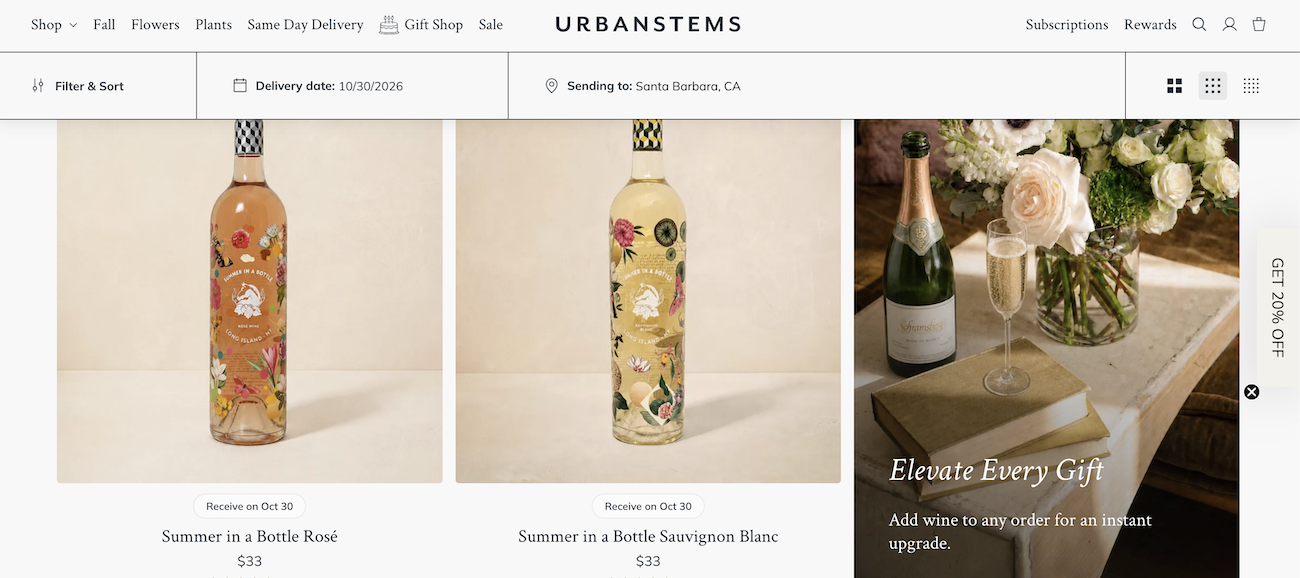
The same model runs for other retailers and brands, including UrbanStems, Quince and Half Baked Harvest.
Yes. So far in 2026, 85.6% of Macy's Wine Shop customers are returning buyers. That is up from 57.3% in the 2021 launch year. Since 2024, the returning customer rate has held between 83% and 88%.
Here is the returning customer rate by year: 57.3% in 2021, 83.2% in 2024, 87.9% in 2025 and 85.6% in 2026 to date. In the first year, most buyers were trying wine from Macy's for the first time. In later years, most buyers had purchased before and came back.
That pattern matters for any retailer weighing a new category. A category customers return to adds lifetime value. It also gives shoppers one more reason to visit the site.
Macy's Wine Shop converted at 4.46% so far in 2026. That is about 1.7 times the global eCommerce average of 2.66% reported by Dynamic Yield. It is also above the 3.5% to 4.0% conversion range that Grips Intelligence tracks for online wine retailers.
Conversion has risen every year since 2024. It went from 3.83% in 2024 to 4.06% in 2025 and 4.46% in 2026. That is a 16% relative gain in two years.
Wine shoppers often arrive with a clear purpose, such as a gift or a dinner. A retailer that already serves those occasions can turn that intent into an order on its own site.
The average Macy's Wine Shop order was $108.21 so far in 2026. Average order value has gone up every year since 2024, from $103.73 that year to $106.06 in 2025. The typical wine order at Macy's now clears $100.
Wine also raises the value of orders across a retailer's site. At UrbanStems, a flower delivery brand that also runs on DRINKS Anywhere, orders that include wine average $189.30. Orders without wine average $121.81.
Shoppers buying for a birthday, holiday or dinner party want the whole gift in one place. When wine is on the same site, the basket closes there instead of at a liquor store.
Five years of Macy's Wine Shop data show that wine can become a lasting, repeat category on a general retail site. Since launch, the shop has generated more than $20M in gross sales. Customers return at a high rate, and orders average more than $100.
For anyone who owns growth at a retailer or consumer brand, the takeaway is practical. The licensing and compliance barrier that kept wine off most retail sites no longer has to sit with the retailer.
The open question is what wine would do for your own customers and occasions. To see how DRINKS Anywhere works, or to get a custom brief for your site, contact the team at DRINKS.com.
Yes. Through embedded alcohol commerce, a retailer can sell wine on its own site while a licensed partner such as DRINKS holds the licenses. The partner handles compliance, tax, age verification and fulfillment. Macy's has sold wine this way since 2021.
DRINKS Anywhere is an embedded commerce platform from DRINKS. It lets retailers and consumer brands add wine and spirits to their own sites. DRINKS handles licensing, compliance and fulfillment. Macy's, UrbanStems and Quince use it.
Macy's launched its Wine Shop with DRINKS in 2021.
So far in 2026, 85.6% of Macy's Wine Shop customers are returning buyers. That is up from 57.3% in the 2021 launch year.
Grips Intelligence tracks a 3.5% to 4.0% conversion range for online wine retailers as of June 2026. Macy's Wine Shop converted at 4.46% so far in 2026. The global eCommerce average is 2.66%, according to Dynamic Yield.
Macy's Wine Shop has generated more than $20M in gross sales since it launched in 2021.
Latest articles

Blog
DRINKS Anywhere
eCommerce
Wine
Blog
DRINKS Anywhere
eCommerce
Wine
Compliance
Blog
DRINKS Anywhere
eCommerce
Wine