
DRINKS For
DRINKS For
DRINKS For
DRINKS For
DRINKS For


Embedded alcohol commerce is a model in which a non-alcohol retailer sells wine or spirits inside its own website and checkout, while licensed partners accept, fulfill and carry compliance for each order. The shopper buys alcohol alongside flowers, groceries or home goods in one cart. The retailer never holds a liquor license or a bottle of inventory.
The model exists because shoppers already want it. In a January 2026 DRINKS survey of 550 U.S. adults, 65% said they would buy alcohol from their favorite online retailers. Only 14% rejected the idea outright.
Key takeaways
• Embedded alcohol commerce puts alcohol in a retailer’s own checkout, with licensed partners as the sellers of record.
• The retailer owns curation and the customer. The partner and platform own licenses, tax, age checks and shipping.
• It differs from a marketplace, where the shopper leaves your site.
• UrbanStems, Quince, Misfits Market and Half Baked Harvest all sell wine this way.
In this guide
1. How does embedded alcohol commerce work?
2. How is it different from other ways of selling alcohol online?
3. Who uses embedded alcohol commerce?
4. Why is embedded alcohol commerce growing now?
5. What does an embedded alcohol platform handle?
6. FAQ
Embedded alcohol commerce works by connecting a retailer’s catalog and checkout to a network of licensed alcohol sellers. The retailer chooses and markets the products. At checkout, software checks the address, verifies age and calculates tax, then routes each order to a licensed partner that can ship to that state.
The shopper sees one store and one checkout. Behind it, two systems meet: the retailer’s eCommerce stack and the regulated alcohol supply chain. The platform in the middle keeps the regulated steps with licensed businesses, which is what makes the sale legal.
For example, a Quince shopper can buy a premium champagne in the same cart as caviar and serving pieces. Quince launched this in December 2025 without holding an alcohol license or wine inventory.
Embedded alcohol commerce differs from other models in one way that matters most: the sale stays in the retailer’s own checkout. Marketplaces and delivery apps send the shopper elsewhere. White-label stores often split the cart. Affiliate links hand the customer to someone else entirely.
With embedded commerce, the shopper buys in your checkout and you own the customer. With an alcohol marketplace or delivery app, the shopper buys in the marketplace’s app or site, and the marketplace owns the customer. A white-label store usually runs separately from your cart, so the customer relationship is shared. Affiliate links send the shopper to another retailer’s site, and that retailer owns the customer.
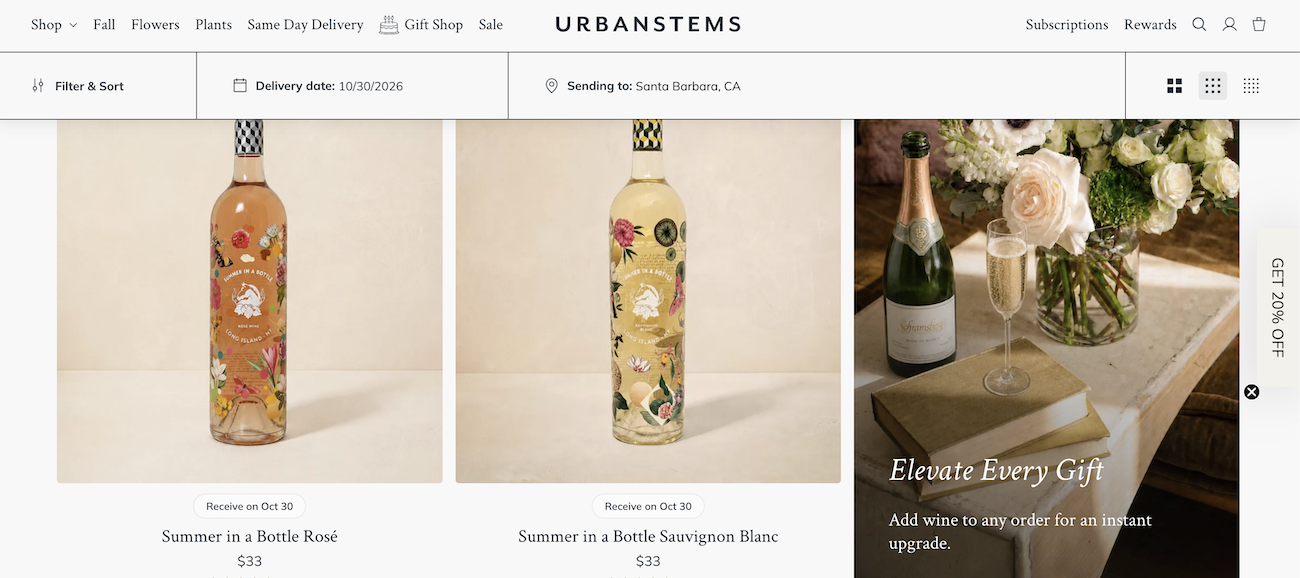
That difference shows up in results. At UrbanStems, wine sits in the existing cart and attaches 62% more often than comparable add-ons on the site.
eCommerce retailers, consumer brands, content creators and publishers use embedded alcohol commerce to add alcohol as a new category. The common trait is an audience that already buys for occasions where wine belongs: gifts, meals and entertaining.
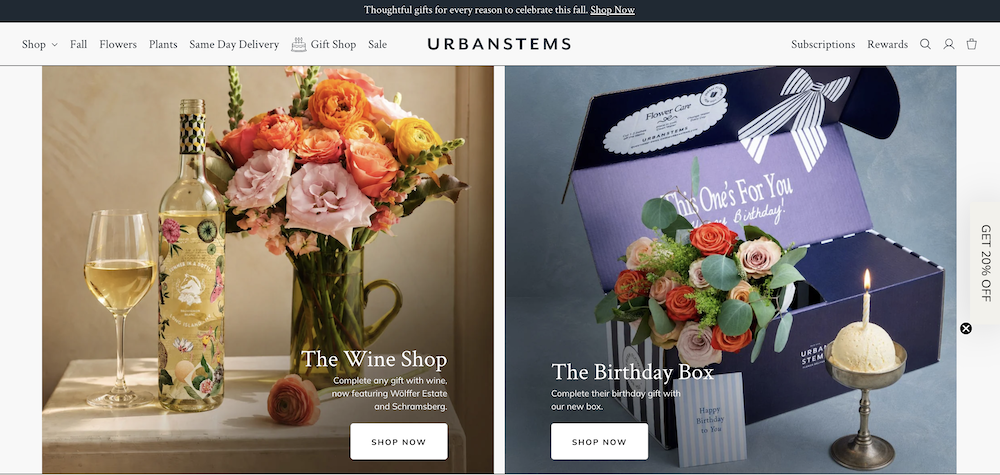
UrbanStems, a floral gifting brand, sells wine as a bouquet add-on, and orders with wine average $189.30 against $121.81 without. Quince, a premium lifestyle brand, sells wine next to its gourmet foods and launched in December 2025 with a premium champagne. Misfits Market, an online grocer, built an organic and sustainable wine range and sold more than 100,000 bottles in year one. Half Baked Harvest, a food creator, runs a curated wine shop for its community, where the average order grew to $165 from about $116 at launch.
Embedded alcohol commerce is growing because shoppers discover alcohol online but often can’t buy it where they find it. Retailers already own that attention. Embedded commerce lets them complete the sale instead of losing it to another store.
The gap is large. In the DRINKS survey, 70% of 21 to 34 year olds said they had found alcohol online they wanted but couldn’t easily buy. DRINKS puts that discovery-to-purchase gap at $40 billion. Meanwhile, online sales were just 3.2% of U.S. alcohol value in 2022, according to IWSR.
The shoppers most open to it are in their peak spending years. 75% of 35 to 44 year olds said they would buy alcohol from their favorite online retailers.
An embedded alcohol platform handles every regulated step behind the checkout. That includes state rules, excise tax, age checks, dry-area blocks, volume limits, routing to licensed sellers and fulfillment. The retailer handles curation, merchandising and the customer relationship.
The platform’s work in detail:
• Applying each state’s shipping and product rules at checkout
• Calculating excise and sales tax for the delivery address
• Verifying age at checkout, with adult signature at delivery
• Blocking dry counties and enforcing volume limits
• Routing the order to a licensed retailer or producer for that state
• Coordinating payment between the shopper, partner and retailer
What does “embedded” mean in embedded commerce? It means the product is sold inside another business’s existing buying experience. The shopper doesn’t switch sites, carts or accounts.
Is embedded alcohol commerce legal? Yes. Every sale goes through a licensed business under state law. The retailer markets the product; the licensed partner sells it.
Who is the seller of record? The licensed retailer or producer that accepts and ships the order.
Which alcohol categories work best? Wine, because it ships to the most states. Sparkling wine is strong for gifting.
How long does it take to launch? As little as four months. Misfits Market launched in four.
About DRINKS Anywhere. DRINKS Anywhere lets eCommerce retailers and consumer brands sell wine and spirits in their own checkout, without licenses, inventory or fulfillment. Licensed partners sell and ship every order, and DRINKS handles state rules, tax and age checks. Talk to our team: https://drinks.com/contact
Latest articles
Blog
DRINKS Anywhere
eCommerce
Wine
Compliance
Blog
DRINKS Anywhere
eCommerce
Wine
Blog
DRINKS Anywhere
eCommerce
Wine