
DRINKS For
DRINKS For
DRINKS For
DRINKS For
DRINKS For

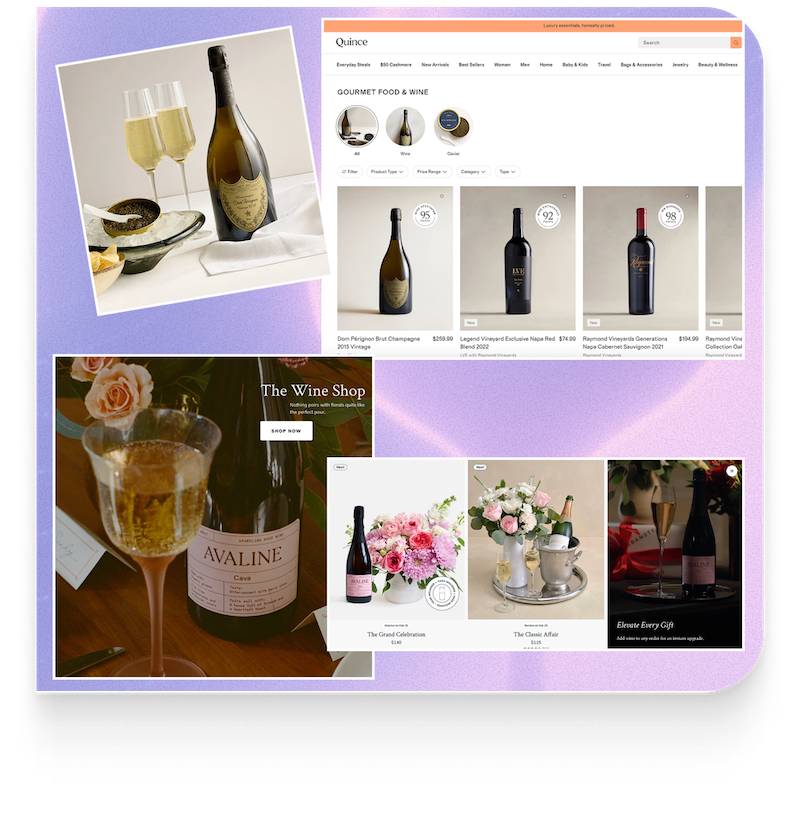
The eCommerce growth play most brands miss is adding a high-affinity complementary category to sell more to customers they already have. At any given moment, roughly 95% of your potential audience isn't in the market to buy (the "95:5 rule" identified by Professor John Dawes of the Ehrenberg-Bass Institute) yet most teams spend their entire budget chasing the other 5%.
That was the opening provocation from a DRINKS webinar with eCommerce advisor Andy Lark. He talks about what actually moves revenue, not trends.
Flat budgets, declining email performance, and shifting consumer habits are squeezing eCommerce teams that are asked to solve more with fewer resources. AI helps — productivity gains of 10% to 30% are real for teams applying it well — but it amplifies good judgment rather than replacing it.
The deeper shift is from system-of-record to system-of-engagement. CRM and marketing automation got brands this far; what comes next uses real-time data, direct customer interaction, and behavioral signals to inform buying decisions, not just log them.
No, buying routines are harder to change than most teams assume. Most people buy infrequently, on impulse or against ordered patterns built over years, and the idea that one campaign or email sequence reshapes those habits is largely a myth. What works is building a reason to return before the customer is in a buying moment: content, curation, social presence, and complementary products that shift recency and frequency over time.
As Andy framed it, awareness isn't enough. Brand love without purchase frequency is economically inert. The brands winning now turn awareness into repeated engagement, and engagement into new buying occasions.
Adding a high-affinity complementary category is the fastest way to lift recency, frequency, and average order value without rebuilding the core business. The logic is simple: a customer who just bought a hoodie isn't ready to buy another hoodie, but they might buy wine, flowers, or something they didn't come looking for yet would gladly add if it felt natural.
Alcohol is the highest-affinity complementary category across nearly every vertical: fashion, publishing, gifting, food, and flowers. In a national DRINKS survey, 65% of consumers said they'd buy alcohol from their favorite online retailers, rising to 75% among those aged 35 to 44.
The historic barrier was regulatory complexity: licensing, compliance risk, and inventory burden under the three-tier system locked most non-alcohol brands out. DRINKS Anywhere solves that: brands offer curated alcohol selections without holding licenses, carrying inventory, or disrupting checkout, while keeping full control over curation and customer experience.
Recency drives frequency, frequency drives basket size, and basket size drives lifetime value. If a customer is worth $500 a year to a fashion brand today, adding one high-frequency complementary category can double that figure, not through a better promotion or new email sequence, but by giving a trusted customer another reason to spend.
Loyalty is the multiplier. Most programs reward transaction history; the more powerful approach embeds a complementary category into the loyalty tier itself, granting a long-term customer access to a wine club as a function of tenure, not just their last purchase.
As much as they want. The DRINKS data engine recommends an initial assortment based on brand positioning and customer demographics, and the brand makes the final call. Some launch with a full wine page; others start small and expand.
Yes. Brands like Quince (a $1B+ eCommerce operation) add wine because the revenue compounds: wine members become repeat buyers, and gifting occasions like Valentine's Day and anniversaries open buying windows core categories can't capture alone. See the UrbanStems case study for a gifting example.
Even for brands without a traditional eCommerce checkout, integration is straightforward. DRINKS works across platforms and has implementation experience across some of the largest alcohol eCommerce operations in the country.
Alcohol eCommerce is entering a phase of sustained growth: IWSR projects the global online alcohol channel will surpass $36 billion by 2028, a 20% increase in value over five years. Brands that establish themselves early gain a structural advantage over those that wait. The broader principle applies beyond alcohol: thoughtful category expansion built on genuine brand affinity is how brands double the value of existing customers without doubling acquisition spend.
A complementary category is a high-affinity product line added alongside a brand's core offering to increase how often existing customers buy. Alcohol is one of the highest-affinity complementary categories across fashion, gifting, food, and flowers.
Through RFM math: recency drives frequency, frequency drives basket size, and basket size drives lifetime value. Adding one high-frequency complementary category can double a customer's annual value without new acquisition spend.
DRINKS Anywhere lets brands offer curated alcohol selections without holding licenses, carrying inventory, or disrupting checkout, handling the compliance and three-tier complexity while the brand controls curation.
In a national DRINKS survey, 65% of consumers said they'd buy alcohol from their favorite online retailers, and willingness rose to 75% in the 35–44 demographic.
Latest articles
.jpeg)
Blog
DRINKS Anywhere
eCommerce
Wine
Blog
DRINKS Anywhere
eCommerce
Wine
Blog
DRINKS Anywhere
eCommerce
Wine